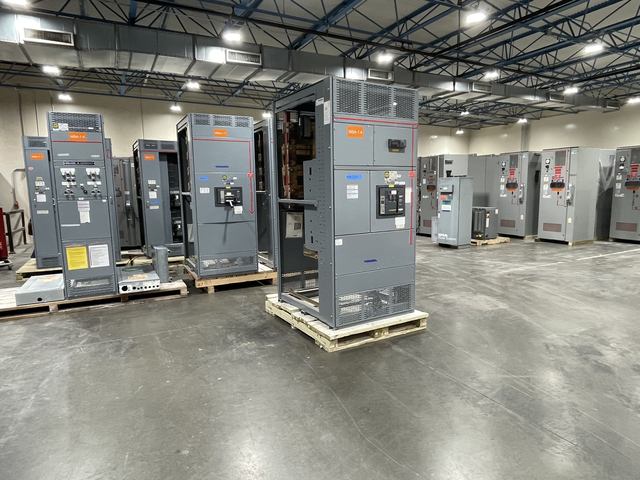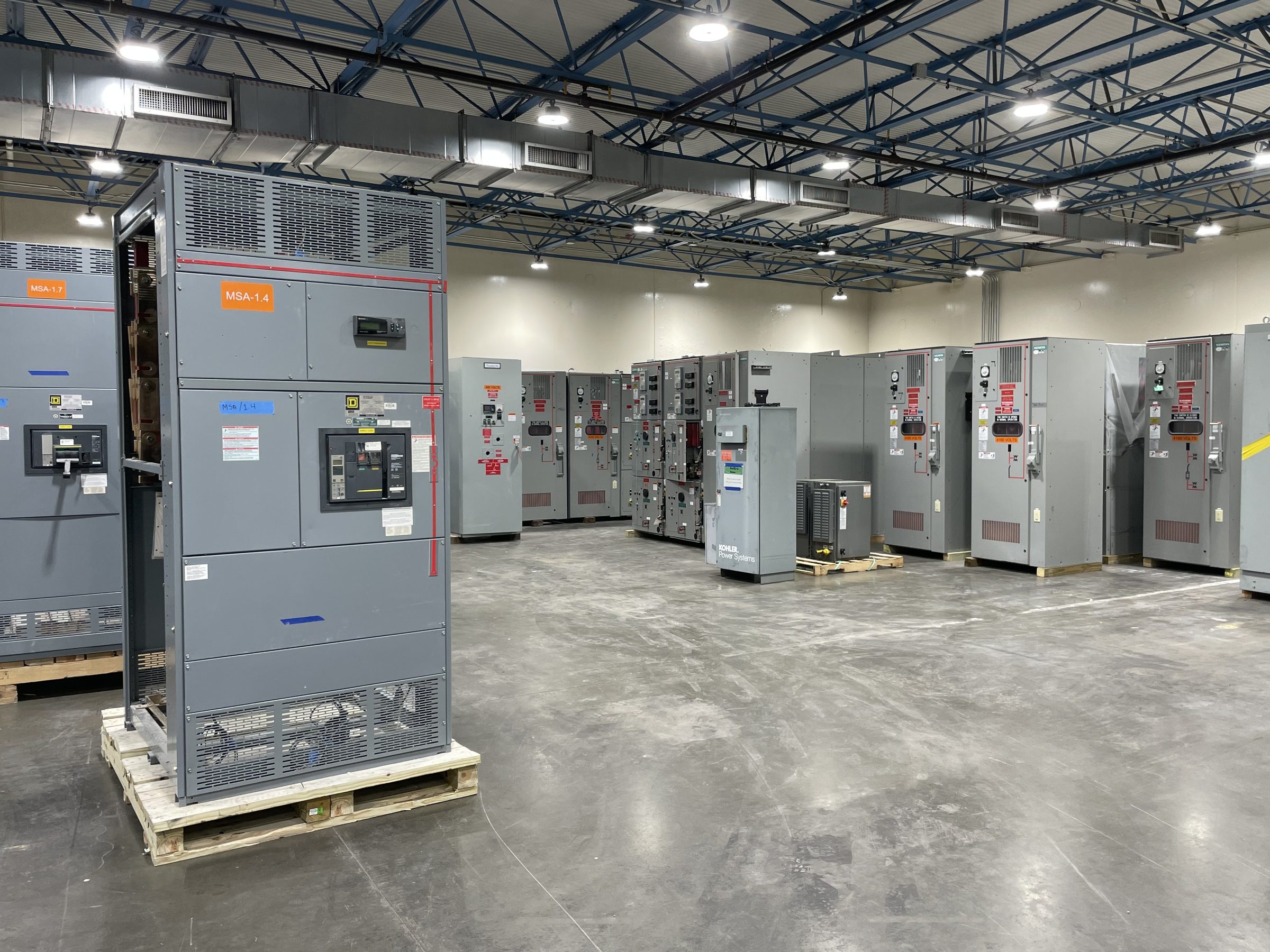
What we buy: switchboards
Switchboards distribute incoming power through a main section and feeder sections. Sellers may have a complete board, individual sections from a renovation, or spare devices from a replaced distribution system. We consider equipment across all voltage classes and review each proposed purchase.
If you have switchboards from data centers in Wisconsin, you can ask about a single assembly or a larger disposition. The equipment may already be disconnected, or it may need a planned release from the site. We consider used, surplus, and decommissioned assets and review each offer on its own merits rather than quoting an unsupported price or guaranteeing purchase of every lot.
Selling from data centers
Data center sellers may have distribution lineups, transfer switches, breakers, busway, or related equipment released after a replacement. Identify whether the offered gear is isolated, redundant, or still tied to a live critical-load path; labels alone do not establish that a circuit is safe.
Critical power and security often govern the schedule. Tell us about maintenance windows, escort rules, floor loading, ceiling or raised-floor obstructions, and which redundant path must stay online. Do not share sensitive network or customer information when an equipment label and access contact will answer the question.
We handle all rigging and logistics for the accepted purchase, including arranging the qualified electrical disconnect, crane when needed, loading, hauling, and all freight. We coordinate the work with the authorized site and utility contacts; the seller is paid upfront before removal work begins.
Photos, labels, and an honest equipment description
Photograph the overall board, the main nameplate, the main device, feeder labels, and any section or device tags visible without opening energized equipment. Ampere rating, voltage, number of sections, enclosure type, and a one-line diagram help distinguish the board from a collection of individual breakers.
To describe switchboards from data centers in Wisconsin, tell us the count of assemblies and any separate boxes of parts. A legible nameplate photo is more reliable than guessing the manufacturer, voltage, or current rating from cabinet size. Share existing drawings if convenient and point out labels that cannot safely be read. Seller testing and removal of energized covers are not needed.
Condition, completeness, and seller testing
Tell us whether the main and feeder devices remain installed, whether covers and bus connections are present, and if the board has been modified. Report known water damage or missing sections rather than trying to restore it before asking. We review equipment as presented and do not require seller testing.
You can offer the switchboards as-is; you do not have to test, clean, or repair the equipment first. Let us know if components are missing or a particular section has been damaged. Known fluid, asbestos, contamination, or other material concerns need to be disclosed and assessed before a purchase can be agreed. Do not open, disturb, or sample suspect material for the sake of an offer.
Electrical disconnect and safe release
Switchboards are often anchored and connected to cables or busway above or below. A photo showing those connections, the surrounding floor space, and the route to an outside door helps our crew plan a safe disconnect and lift. We coordinate that work rather than asking the seller to cut cables or move the board.
We arrange and pay for the disconnect of the switchboards included in an accepted purchase, using appropriately qualified personnel and coordinating with the facility and utility when needed. The authorized site controls access, identifies retained circuits, and approves the work window. Qualified personnel verify isolation and address stored energy using applicable procedures; a seller should not attempt electrical work to prepare for a sale.
Rigging, crane, loading, hauling, and freight
The buyer handles all rigging and logistics for an accepted purchase involving switchboards. We plan the move, arrange a crane when needed, provide the handling crew, handle loading, haul the equipment away, and pay all freight. Our team also arranges the electrical disconnect. The seller does not need to find a rigger, put equipment on a truck, or pay a separate freight bill for the agreed purchase scope.
A practical pickup plan for switchboards from data centers in Wisconsin starts with the building exit and truck approach. Share a rough door measurement, floor level, travel distance, and any photos of tight turns. Also note whether a site escort, lift window, permits, or neighboring tenant approval may be necessary. We arrange the handling method and coordinate the agreed work with the site.
Cash offer and upfront payment
We review switchboards from data centers in Wisconsin and can offer money for the equipment we agree to buy. The seller gets paid upfront, before disconnect, rigging, or hauling begins. Our written terms identify the purchased assets, payment method, timing, and agreed pickup scope. A cash offer is not a claim that payment must be physical currency, and a review does not obligate you to sell.
For the switchboards, describe all pieces you intend to transfer and any that must stay. We do not publish made-up prices; the actual equipment and the work involved determine whether we can make an offer. Confirm who owns the lot and whether a lease, lien, property transaction, or utility agreement requires another party's authorization before a sale.
Prepare the scope and ask your next question
Should the main and feeder sections be sold together? Tell us what must remain in the building, including any devices serving active loads. We will define the sale boundary before offering on the material available.
To start a discussion about switchboards from data centers in Wisconsin, provide the Wisconsin city or county, your contact and authority to sell, the equipment type and quantity, safe photos of visible nameplates, and the known availability date. Mention if another contractor or a property sale affects access. You can describe an upcoming release even if the equipment is still installed; the exact pickup schedule is coordinated after the scope is understood.
We buy rather than sell switchboards. Our role is to evaluate the lot, make an offer when it is a fit, pay the seller upfront on agreed terms, and handle disconnect and removal logistics. Equipment not listed in the purchase agreement stays outside the sale. If a detail is uncertain, say it is unknown rather than risking access to live equipment.