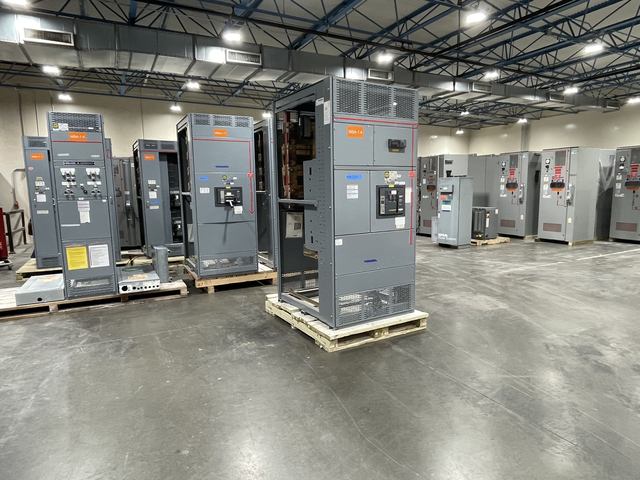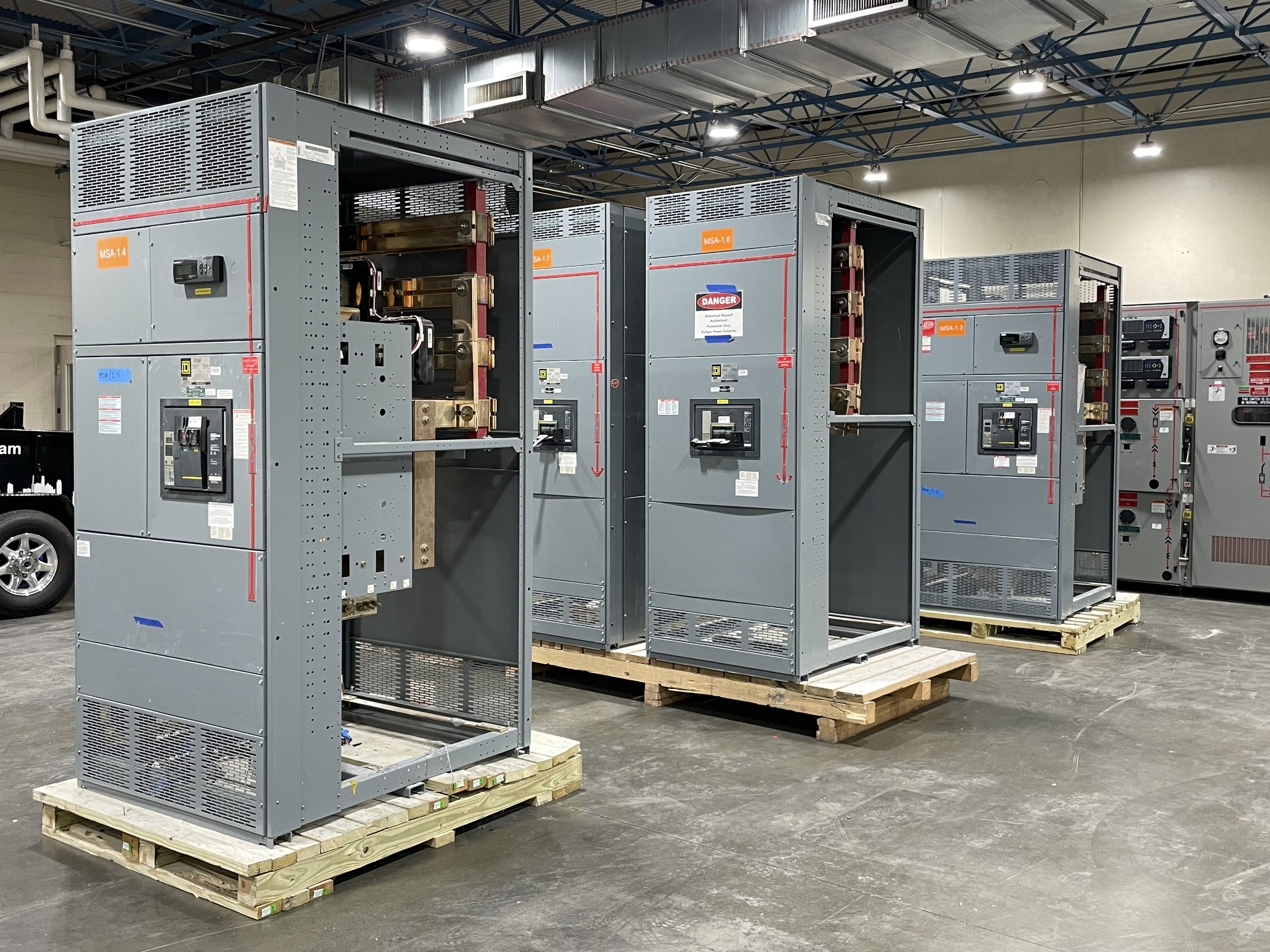
What we buy: busway and bus duct
Busway, also called bus duct, carries power through enclosed conductor sections and may connect switchboards, transformers, and distribution equipment. A project can include straight runs, elbows, tap-off units, and fittings. We consider equipment across all voltage classes and review each proposed purchase.
We are buying busway and bus duct in Wisconsin, not offering electrical equipment for sale. Let us know whether yours is an installed assembly, a redundant spare, or equipment released during an upgrade. We review working and untested items, then decide whether the equipment and the proposed removal scope fit an offer. Every lot is assessed separately; no fixed price is implied.
Photos, labels, and an honest equipment description
Photograph nameplates and accessible sections, plus a wide view of the route. Share the ampere and voltage ratings, approximate length, number of runs, fitting types, tap-off devices, and whether the system is indoor or outdoor. A sketch or existing drawing is useful when the full route cannot be seen in one photo.
To describe busway and bus duct in Wisconsin, tell us the count of assemblies and any separate boxes of parts. A legible nameplate photo is more reliable than guessing the manufacturer, voltage, or current rating from cabinet size. Share existing drawings if convenient and point out labels that cannot safely be read. Seller testing and removal of energized covers are not needed.
Condition, completeness, and seller testing
State whether covers, joints, supports, tap-off units, and fittings are included and report known damage, corrosion, water exposure, or alterations. Mixed sections can have different ratings or manufacturers, so separate photos help. We do not ask sellers to energize the busway or test its insulation before requesting an offer.
You can offer the busway and bus duct as-is; you do not have to test, clean, or repair the equipment first. Let us know if components are missing or a particular section has been damaged. Known fluid, asbestos, contamination, or other material concerns need to be disclosed and assessed before a purchase can be agreed. Do not open, disturb, or sample suspect material for the sake of an offer.
Electrical disconnect and safe release
Busway can run above occupied spaces, across building joints, or through walls. Tell us the ceiling height, obstacles, working hours, and any portion that must remain connected. Buyer-arranged qualified crews handle isolation, disconnect, access equipment, rigging, loading, and transport under the agreed project scope.
The seller does not have to disconnect the busway and bus duct. We arrange and pay for that work with qualified personnel as part of the agreed purchase, coordinating with the responsible site and utility where required. The facility must identify the sale boundary and authorize the release; only qualified personnel should verify isolation, deal with stored energy, and carry out the electrical work.
Rigging, crane, loading, hauling, and freight
You do not have to deliver the busway and bus duct. Once the purchase is agreed, the buyer handles all rigging and logistics, including the disconnect, crane where needed, loading, hauling, and all freight. We arrange the qualified people and equipment for that work. Describe site access honestly so the removal plan and accepted offer can account for the actual property.
If the busway and bus duct is scattered across a site, list the rooms and the best access contact for each. Note any overhead wires, door or gate limits, unfinished floors, and available yard space. Unknown weights are acceptable at the initial discussion. Our team uses the agreed scope and access information to coordinate qualified crews, equipment, and freight.
Cash offer and upfront payment
After reviewing the photos, details, and removal scope for busway and bus duct in Wisconsin, we can make a cash offer for equipment we accept. The offer identifies what is purchased and the agreed payment and pickup terms. The seller gets paid upfront, before disconnect and removal work begins. A cash offer means an offer to purchase for money; the payment method is agreed in writing, not assumed to mean physical currency.
For the busway and bus duct, describe all pieces you intend to transfer and any that must stay. We do not publish made-up prices; the actual equipment and the work involved determine whether we can make an offer. Confirm who owns the lot and whether a lease, lien, property transaction, or utility agreement requires another party's authorization before a sale.
Prepare the scope and ask your next question
Do elbows and tap-off units matter? They define the actual lot and the removal work, so include them in the photos or list. The offer identifies the sections and accessories being purchased rather than assuming every connected component is for sale.
To start a discussion about busway and bus duct in Wisconsin, provide the Wisconsin city or county, your contact and authority to sell, the equipment type and quantity, safe photos of visible nameplates, and the known availability date. Mention if another contractor or a property sale affects access. You can describe an upcoming release even if the equipment is still installed; the exact pickup schedule is coordinated after the scope is understood.
We buy rather than sell busway and bus duct. Our role is to evaluate the lot, make an offer when it is a fit, pay the seller upfront on agreed terms, and handle disconnect and removal logistics. Equipment not listed in the purchase agreement stays outside the sale. If a detail is uncertain, say it is unknown rather than risking access to live equipment.